

Even the most loving relationships can carry conflicting messages—and shape the way we see ourselves, our bodies, and our power.
A client of mine recently said something during a session that stopped me in my tracks. She was in the thick of a divorce, emotionally raw and frustrated with her ex’s parenting.
“Kids really only need one parent, right?”
It wasn’t a bold declaration—it was more of a defensive, exhausted, heart-weary plea. She was showing up fully, trying to hold it all together. And feeling like the other parent was… well, not.
But that comment got me thinking.
So much of our belief systems—our ideas about love, responsibility, worth, and safety—are shaped by our childhood experiences. Especially our relationships with our parents.
And for many of the multitasking, high-achieving women I work with, the relationship with their father plays a pivotal, often unexamined role in their adult lives.

The Father Wound No One Talks About
It’s the invisible thread that runs through so many of our behaviors:
- The over-functioning
- The perfectionism
- The struggle to trust or receive
- The way we tolerate less than we deserve
- The way we over give, over perform, and override our own needs
Whether a father was present or absent, emotionally available or closed off, empowering or critical—it all leaves a mark.
And even in the most loving relationships, there can be confusing, even damaging, messages passed down.
I know this personally.
My Dad Is My Rock… But the Messages Were Mixed
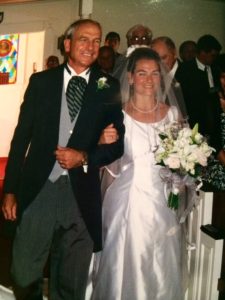
I love my father deeply. He has been my rock throughout my life—present, supportive, engaged. I am endlessly grateful for that.
AND… there were unspoken, often unconscious messages I picked up in childhood that shaped how I saw myself and the world.
He taught me to be strong.
To be independent.
That I could do anything a man could do.
But I also watched him do everything for my mother.
He told me to cover up my body so I wouldn’t “give men ideas.”
So even in a loving household, I received conflicting messages about gender roles, safety, strength, and self-expression.
Messages that influenced my choices, values, and relationships—long before I was aware of them.
So Let Me Ask You…
How is your relationship with your father?
And more importantly…
How has it shaped you?
What unspoken rules or beliefs did you internalize from your relationship with your dad?
➡️ About how strong you had to be?
➡️ About what makes you lovable or worthy?
➡️ About your voice, your body, your safety, your power?
And are those beliefs still serving you—or silently holding you back?
Healing the Father Wound Isn’t About Blame—It’s About Freedom
This isn’t about pointing fingers or rehashing old pain for the sake of pain. It’s about awareness. It’s about conscious healing.
Because healing the belief systems we internalized from our fathers (or the absence of them) is pivotal to:
- Reclaiming your voice and your choices
- Making decisions from a place of soul-aligned power, not fear
- Understanding your worth doesn’t come from doing, fixing, or proving
- Allowing others to meet your needs without guilt or shame
It’s about rewriting the story.
Reclaiming your role as the author of your life.
And choosing beliefs that actually support the woman you’re becoming.
Ready to Reframe the Story?
If this stirred something in you—if you felt seen, called out, or even a little tender—you’re not alone.
And you don’t have to untangle it all by yourself.
I have a few Complimentary Empowerment Breakthrough Sessions available over the next few weeks. These are private, one-on-one sessions designed to help you identify the limiting beliefs, subconscious patterns, and childhood conditioning that are still impacting your life—and begin to shift them.
If you’re ready to explore, examine, and transform those stories into something more empowering…
👉 Click here to schedule your session
Let’s do the work your future self will thank you for.
With heart and truth,
Jen
P.S. Even if your father was amazing, even if he did his best, it’s still okay to explore what messages you received that might need to be released or rewritten. Healing doesn’t dishonor him—it honors you.


